Art, color and painting have always been closely linked to each other, as we have all been able to observe on numerous occasions. In the same way, we can also see how color and paint are fundamental aspects of car design and customer tastes. However, it is no longer so common to relate art to the automobile, or at least, it is not something that everyone knows about. So, do you think there is any relationship between art and vehicles? Well, it goes without saying that the answer is affirmative, and this is showcased through a trend called Art Car.
What is Art Car?
Simply put, Art Car is an abbreviation of “artistic car”, a definition that gives us a clear idea of what is meant. In the art car, the “canvas” plays a fundamental role, in such a way that, through its volumes, the car might emphasize and enhance certain aspects of the work. In the same way, the work contributes character to the car, bestowing on it the attributions of speed, robustness… even when static. That is why Art Car is a way of customizing vehicles through an artistic design that goes beyond any traditional technique commonly used for this purpose, which on the other hand is quite normal whenever we talk about art. In short, Art Car projects the link between its owner or the artist who designs it and the vehicle by means of daring designs that leave no one indifferent.
Origins of the Art Car
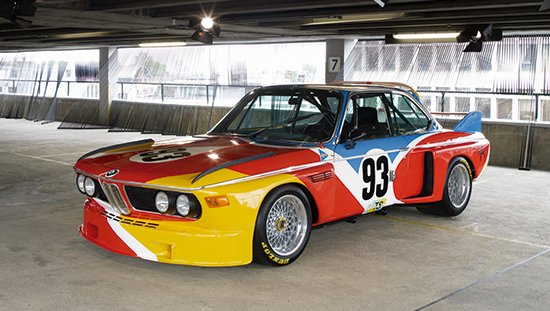
The origins of Art Car go back to the seventies, when car enthusiast Hervé Polain, who was linked to work of art auctions and competed in the 24 Hours of Le Mans, decided to customize the outer bodywork of the BMW 3.0 CSL he used for competitions. In fact, the work was commissioned to his friend, American sculptor Alexander Calder, who was put in charge of decorating it. Since then, many designs have been made and vehicles have been marketed using this particular customization technique.
And since we are talking about customization, art, paint and color, why not list some of these vehicles and their main features? They are nothing if not amazing!
The most famous Art Car vehicles
Without a shadow of doubt, the first Art Car that we must mention is the pioneer of this trend – the BMW 3.0 CLS that competed at Le Mans in 1975. The style used is quite sober if we compare it with other designs. The decoration used is centered around covering the entire body with 5 basic colors, namely red, yellow, white, black and blue. In addition, it also does not make use of stickers or sponsors. However, the way the colors are distributed and associated, and the geometric pattern used show a perfect balance that makes this design stand out due to its overflowing style.
In 1976, this same vehicle model was redecorated, as we can see in this link, although this time through American painter and engraver Frank Stella, given that Alexander Calder died that same year. Despite the short space of time elapsed after its predecessor, the design used this time was much more daring due to the predominance of a marked geometric pattern reminiscent of the graph paper used in technical drawing. It does not stand out due to having used a varied color palette, since the background color used is white, and black was used for the grid.
Possibly the most famous work of art is the BMW M1 painted by iconic Pop Art movement artist Andy Warhol, in 1979. This car competed in the 24 hours of Le Mans and came sixth.
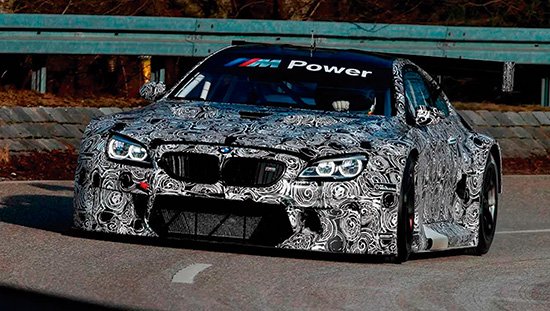
From then on, many BMWs have been personalized under the criteria established by Art Car, so that, today, this manufacturer collaborates with different designers to apply this type of customization to some of its vehicles, as is the case with the BMW M6 GT3, which has been presented with various designs, some more daring, while others are more sporty. In the middle of all this, other very curious designs have been created on BMW vehicles, such as those that we may find in this link.
However, BMW is not the only brand to have been decorated using this peculiar type of customization. Some examples of Art Car offered for sale or that have been used in competition by other manufacturers are as follows:
- Alpine A110. Hand-painted by the artist Felipe Pantone under the design that characterizes it and that is usually influenced by technology, the future and the cosmos (ultradynamism).
- Chevrolet Corvette C7R. The vehicle, which was prepared to race in Le Mans, was designed in a modern fashion that refers to the peculiar style of the world of graffiti. However, the most curious thing is that phosphorescent paint was used so that the pattern used could also be seen at night.
- Lamborghini Huracán. This supercar was decorated by Paolo Troilo taking as inspiration the myth of the minotaur, since the brand’s logo is a bull. In this way, he represented the fusion that occurs between this motorized beast and its owner.
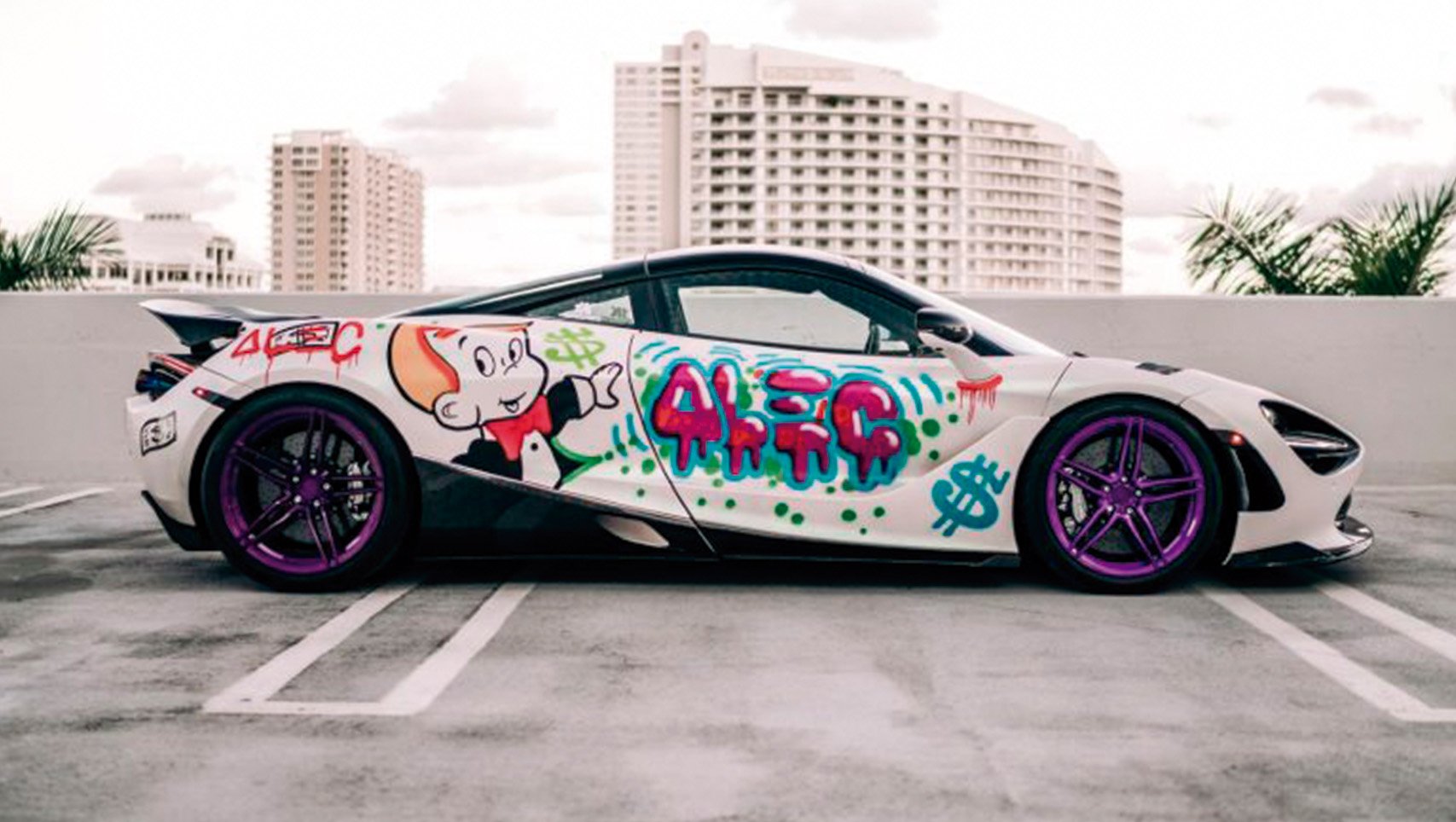
- McLaren 720S. Continuing with the world of graffiti, street artist Alec Monopoly customized this vehicle taking as inspiration the theme that characterizes the board game that coincides with his own last name.
- Porsche 356 C, where artist David Richards used a colorful style to show the history of the universe using Janice Joplin’s vehicle as a canvas.
- Art Car is also found in utilitarian vehicles such as the Citroën e-Méhari, where designer Jean-Charles de Castelbajac captured a modern and colorful design, or the Volvo XC60, where Antonio Azzato used Velázquez’s Las Meninas to reflect his urban project “Velázquez’s infinite message”.
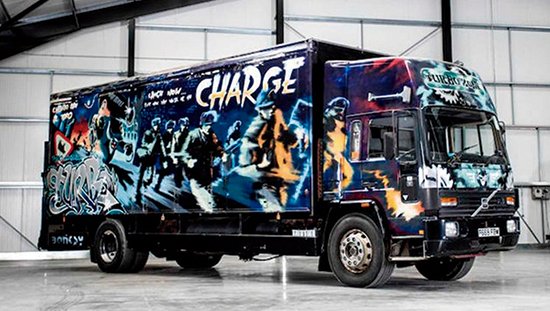
- As for industrial vehicles, Art Car may be identified in the Volvo FL6 crafted by anonymous designer Banksy (whose real identity unknown). The design used is varied, with sober colors, and a combination of different styles.
And since art is very subjective and oftentimes eccentric, you can’t miss the most daring and bizarre Art Car that some designers have used to decorate vehicles. As an example, there is the Lexus UX, which won the 2021 Art Car competition in Spain, with a covering made up of paper petals; the Porsche 911 996 Swan (by Chris Labrooy), which was turned into a float to commemorate the brand’s 20th anniversary in China, or the Porsche 911 Fat Car (by Erwin Wurm) where this model was represented with a very curious body that aims to show what it would look like if the vehicle breathed.
Artist Andy Saunders was inspired by the work of Pablo Picasso (Three Musicians and Portrait of Dora Maar) using elements of the bodywork and color to create the “Citroën Picasso”.
Art Car: Art embodied in the bodywork.
As we have seen, art is also part of the vehicles. Manufacturers, drivers, celebrities and individuals alike join forces with artists to reflect everything they want to show the world using their cars’ bodywork as a canvas. This takes vehicle customization to the next level. You may or may not like it, but which one would you keep?