Masking is one of the most important jobs in the vehicle refinishing process. However, sometimes it does not enjoy the relevance it deserves within the industry, being a type of work that is not usually advertised or shared in professional social networks. Why does this happen? Possibly because it is an unglamorous job that we take for granted that it is always done correctly. But, as is often the case, the reality is different, and it is easy to find refinished vehicles on the street with a multitude of defects resulting from poor masking.
That is why we have prepared two articles that address the concept of perfect masking as a way of achieving results that do not compromise the quality of our work. In this first post, we analyze the must-have products for a perfect masking, while the second one, which will be published soon, will go deeper into the operational process that must be followed to achieve a perfect masking and unmasking.
The importance of masking
The importance of masking stems from the influence it has on the final topcoat of the refinished part, due to the fact that most masking defects detract from the quality of the work performed and are easily noticed by the owner, which inevitably compromises the reputation of the bodyshop and, in some cases, requires corrective work or rework, something that directly affects the cost effectiveness of the repair. Therefore, implementing a perfect masking process within the bodyshop’s normal operation brings direct benefits from an economic and reputational standpoint.
Must-have products for a perfect masking:
The must-have products for a perfect masking are relatively few in number and simple to use. However, the use of low quality or inadequate products significantly increases the appearance of masking defects, so our recommendation in this regard is to use products of proven quality and that fit the type of masking to be performed. The most commonly used and important products are listed and briefly explained in the following table:
Masking paper:
- Allows you to cover areas that are not to be repaired to avoid over-spray.
- The masking paper must have a consistent texture and have a laminated side to prevent the paint from seeping through and sticking to the paint on the masked components.
- It is important to have different lengths to adjust precisely to the work area and facilitate its application.
Masking film:
- Performs the same function as masking paper with the advantage that the larger format covers the entire vehicle, reducing the time allotted for masking. It is also necessary to have different sizes and to make sure that they integrate tape on their edge, both of which are elements that serve to speed up the application.
- The film used must be solvent resistant, statically charged to facilitate adhesion to the bodywork and allow dust to be retained, as well as paintable to prevent the paint from peeling off after drying. To avoid confusion, each side must be clearly identified.

Masking tape:
- The masking tape can be used to close the edge and openings of the masking produced with the larger paper and film formats.
- The tape used must ensure that the masking is fixed during the paint application and drying processes. In addition, it must be resistant to the type of paint used (water-based or solvent-based), be easy to handle and cut, leave no adhesive residue after removal and guarantee that it does not remove the paint from the surface on which it has been applied.
- To speed up the positioning process, we recommend having different widths available.
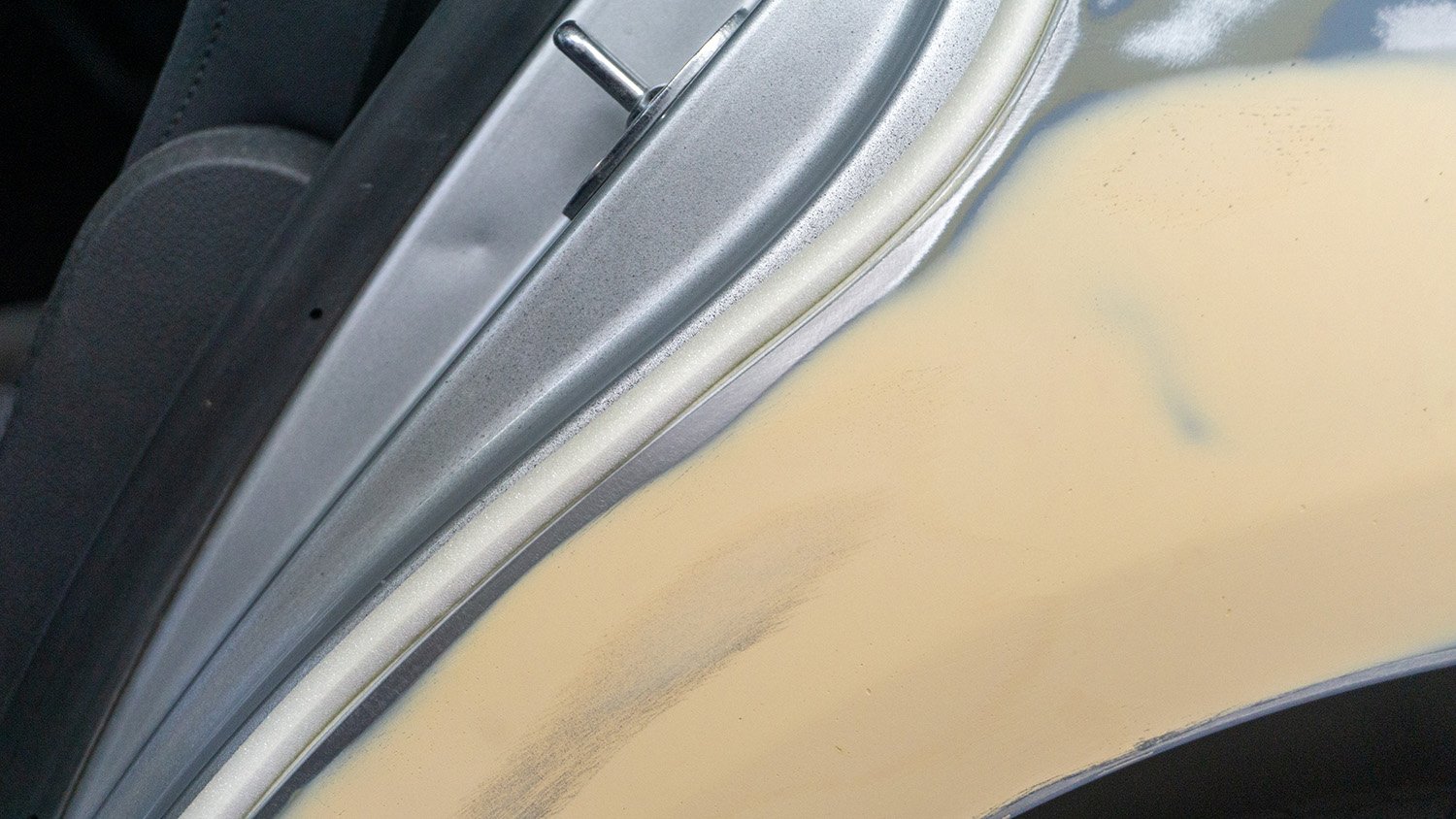
Masking strip:
- The strip is a masking foam that is placed inside the joints of the various bodywork components to seal these gaps. Its application eliminates the risk of over-spray on the interior frames, prevents solid particles of dirt from falling on the painted surface and eliminates the edges of paint that usually remain when masking these areas with other products such as masking tape.
- The strip includes a moist adhesive side that facilitates its placement and subsequent removal without leaving residues.
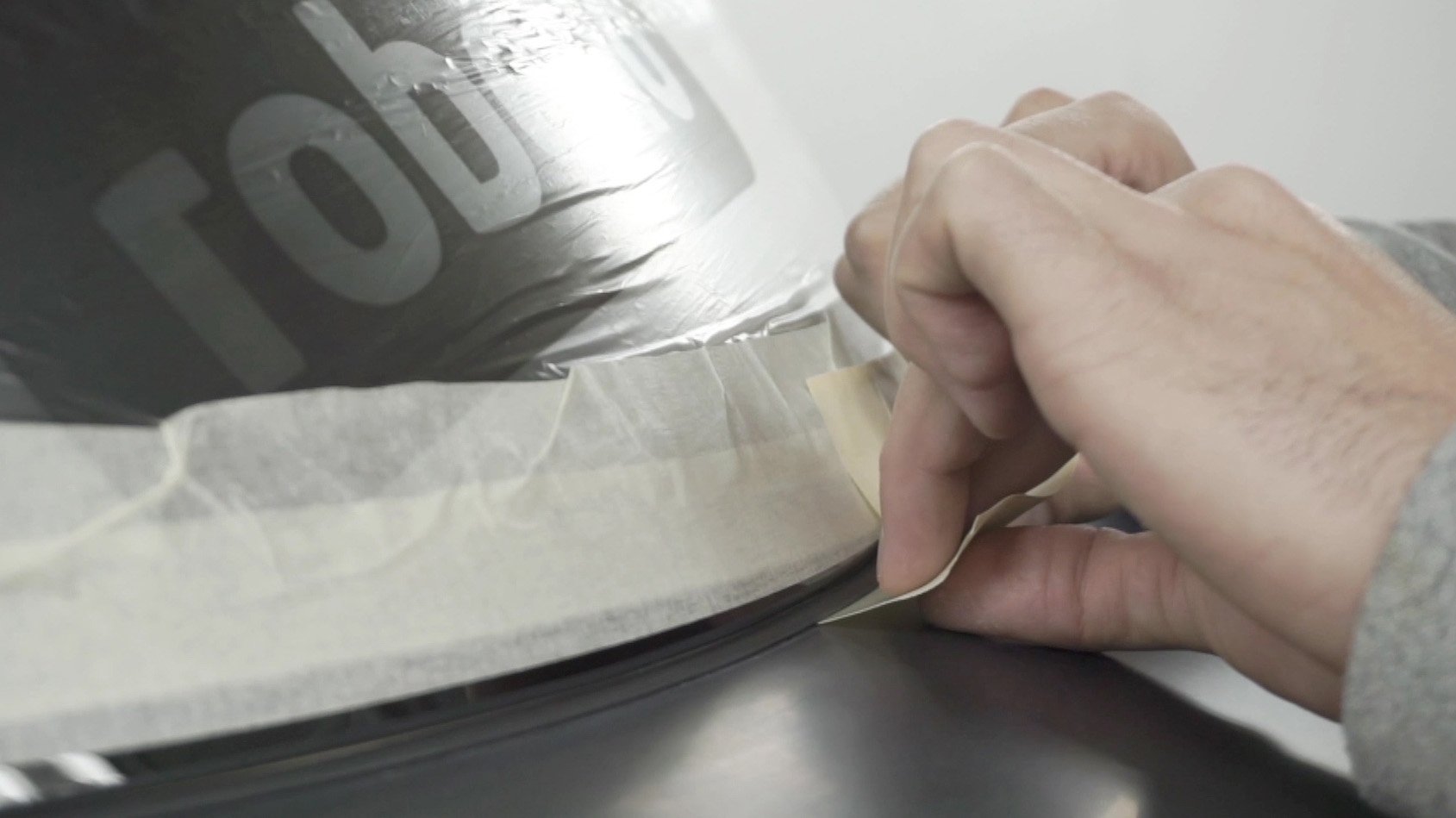
Trim masking tape:
- The vehicle is fitted with various rubber moldings, such as the drip rails or window gaskets, which are mounted on the bodywork panel itself. This makes masking more difficult, and there is a risk of paint edges and over-spray. To avoid this, the tape features a semi-rigid plastic edge that helps to lift the rubber to open the gap and thereby facilitates this work.
Dispensing tools:
- Dispensers allow the masking film and paper to be stored in an orderly manner. This makes handling, cutting and placement easier and more precise, which results in higher productivity. In the case of paper dispensers, it is necessary to include an integrated cutting system, whereas when the dispenser is used with film, the cut is made with a manual blade.
Other masking products and tools:
- Other masking products and tools that can be useful in the bodyshop include wheel covers, cutters or contour tape, among others.
First step towards a perfect masking: having the right products available:
Masking is a very important part of the vehicle refinishing process. For this reason, the first step to bear in mind in order to facilitate this task and make it more efficient and cost-effective it is to have the must-have products for achieving a perfect masking. Therefore, the paper or film, masking tape, strip or trim masking tape must be used, bearing in mind that they must be high-quality products that are suitable for the nature of the work to be carried out.
That concludes our first post about masking. But don’t worry, we will soon publish the second part in which we will talk about the perfect masking and unmasking process, so stay tuned for our upcoming posts!