Steel is one of the most widely used materials in vehicle manufacturing. It is an economical material and is quite malleable, which makes it particularly useful and beneficial for auto body construction. However, its main drawback is that it is sensitive to moisture, leading to oxidization and eventually corrosion. For this reason, to avoid this undesirable effect, manufacturers use different products and paints. Among these products, today we will be highlighting stonechip protectors. Do you want to learn some tips that will ensure you never hesitate to use them?
What Is A Stonechip Protector?
A stonechip protector is a type of primer that is formulated to coat and protect certain areas of bodywork that are subjected to very demanding working or environmental conditions. This type of coating has a series of very specific characteristics that allow it to offer effective and long-lasting protection. The most noteworthy are the following.
- It can be water-based, such as HIDROTEX, or solvent-based with high solids content, such as SILTEX 800.
- It is made with a rubber base in order to provide the paint film with a high level of flexibility that allows it to withstand any impacts. It has a textured finish, high thixotropy, it seals the surface and acts as an anti-corrosive, sound-insulating and anti-vibration coating.
- It can be applied on different substrates and backgrounds, such as bare sheet metal, putties, hardened paints or primers, to name a few.
- It is applied with a specific suction spray gun or an aerosol. The spray gun application is more laborious and requires subsequent cleaning, while the aerosol spray application is suggested for partial touch-ups and is notable for its speed. However, the best finish is achieved with the spray gun variants.
- It is a repaintable paint that is available in black, gray and white, so the color that is most favorable for the top coat can be used. In the case of ROBLINER, a variant that can be tinted is also available.
Where Can Stonechip Protector Be Applied?
Stonechip protector can be applied to any area that is subject to particularly unfavorable environmental or working conditions. Within the vehicle, its main areas of application are as follows:
- Underbody: door sills, skirting and floor.
- Wheel arches.
- On loading areas and cabins of trailers and other vehicles will be applied a bedliner solution as Robliner.
Tips for using a Stonechip Protector
Using and applying stonechip protectors is part of the repair process for certain elements of the bodywork. However, it may be the case that, in order to save time or materials, it is not used, which undoubtedly has an impact on the final quality of the work. For this reason, we are offering you 5 tips to remind you of its importance and the advantages it offers us:
- It is an environmentally friendly product, thanks to its water-based or solvent-based formulations with high solids content.
- It guarantees the durability of the repairs carried out on certain parts of the bodywork that are highly exposed to mechanical or environmental stresses and that are therefore more susceptible to rust and corrosion.
- It is easy to apply and provides a good support for finishing products.
- It allows factory finishes to be reproduced.
- It can be applied on different backgrounds and substrates, and does not interfere with top coats.
How To Apply A Stonechip Protector
Applying the stonechip protector is quite simple, especially when this is carried out using aerosol spray. The general process to be followed is:
- Sand the surface with approximately P-150 grit.
- Clean and degrease the area that will be treated. The cleaner used should suit the substrate that is being worked with. For example, the DA93 cleaning degreaser is suitable for many surfaces, including plastics.
- Mask the parts, elements and adjacent areas to prevent them from being sprayed during the stonechip application process.
- Shake the bottle so that all its compounds are homogeneously mixed.
- If the spray gun format has been chosen, open the can and screw the stonechip paint can onto the spray gun.
- Perform a test application to adjust the texture of the product based on the original finish of the repaired part. To do this, adjust the air pressure according to the value indicated by the manufacturer and apply the product longitudinally in one or two coats, maintaining a distance of about 20 cm and overlapping the different passes. If the roughness obtained does not imitate that of the factory finish, change the values indicated slightly to adjust the finish, so that when you want to obtain a finer texture you can increase the distance and / or working pressure slightly, and when you want to get a more pronounced texture just do the opposite. If the application parameters are changed too much, there is a risk of the following defects occurring:
-Excessively high pressure + Excessive application distance = Texture too fine, overspray and risk of dry application.
-Excessively high pressure + excessively short application distance = uneven texture and risk of sagging.
-Excessively low pressure + Excessive application distance = Difficulty in spraying the paint and it is not applied uniformly to the part.
-Excessively low pressure + Distance too short = Difficult for the stonechip protector to spray properly and coarse texture.
Stonechip protector paint, a great ally for the most exposed areas
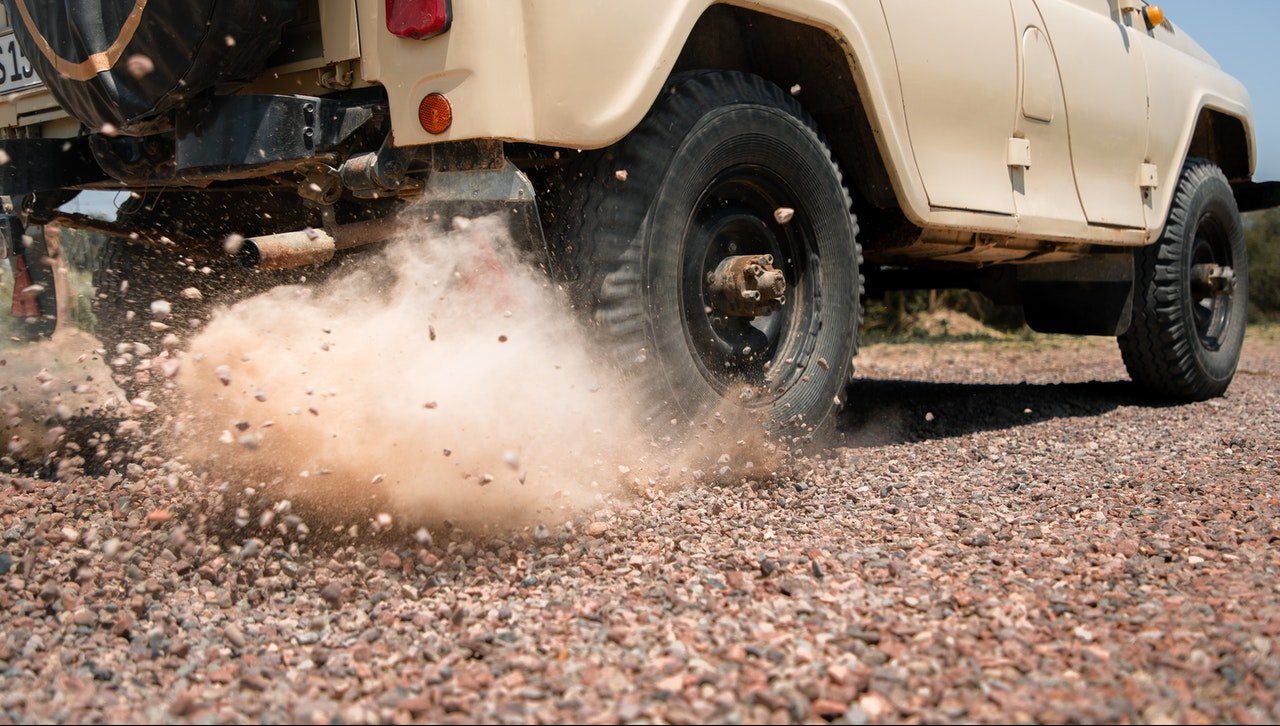
The car body is supported by the wheels and is kept at a relatively low distance from the pavement. This means that these parts are exposed to harsh working conditions. Thus, when performing repairs on these parts, the repair technician is obliged to imitate the factory finish and ensure its durability. With the use of stonechip protector paints, both requirements are fulfilled without major difficulty.