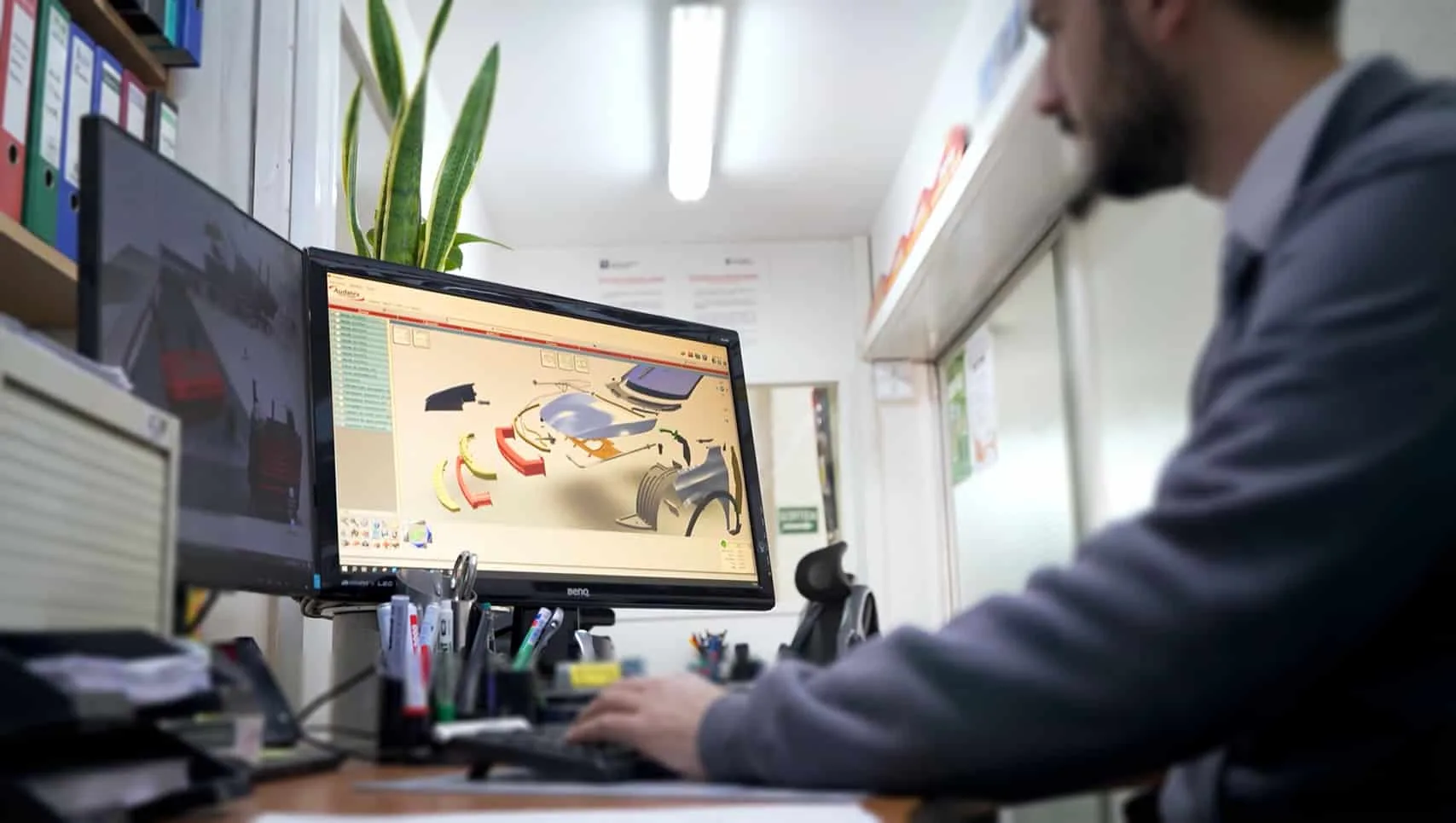
Within the bodyshop, color matching is one of the variables that has the greatest impact on the final finish after a refinishing process. That’s why, the different color manufacturers offer their customers a series of tools for a refinish color match that is as reliable and precise as possible. In addition, in recent years digital color measurement instruments have appeared that allow you to improve your matching process, while optimizing this important step in the vehicle refinish process.
In any case, do you know about these color tools that are a must in any bodyshop? Do you know what advantages they offer? In any case, we will show them to you below so that you can learn about them in greater detail.
The most used color tools in car refinishing
The manufacturer provides tintometric systems that require tools to identify and compare the color needed for auto body refinishing regardless of whether it is water-based or solvent-based. This comparison is essential to determine the similarity between both colors and thus analyze the suitability of the available refinishing paint, in order to adjust the work process to follow, when the differences between them are pronounced.
In this sense, and depending on the degree of equalization that the painter perceives, it establishes the need for a gradient with the adjacent pieces to avoid a variation in the color used. Therefore, when using the color tools, the repair result is always of higher quality.
The most used color tools are in the following table:
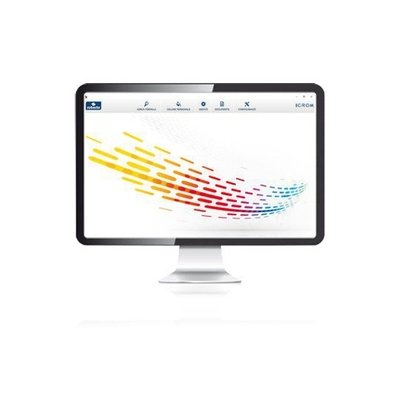
Software – iCrom
- A computer tool installed on a computer that allows to manage in a simple and intuitive way all the aspects and variables related to the color system used in the bodyshop.
- With the software, the painter can consult the technical documentation of the different products, search for color codes, view the basics of a specific formulation or weigh it to produce the chosen color. In addition, it has advanced features such as sharing formulas with other users, recalculating the mixture or assigning product quantities automatically according to the number of pieces selected.
- From the management side, bodyshop managers can consult profitability data or see paint consumption per worker, for example. For more information, access our course
 Spectrophotometer – Xcrom
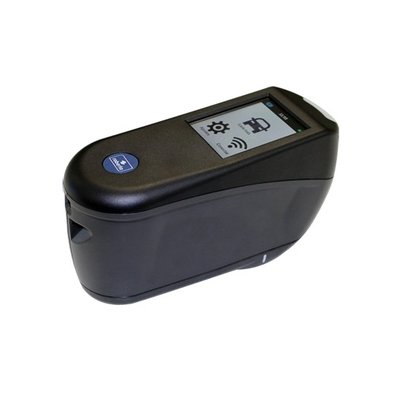
- This is the tool that currently offers the best results in terms of color verification, because it eliminates the subjectivity of the analysis carried out by the painter and is presented as a versatile tool that integrates the digital version of one or more of the color checking tools mentioned above (formula database, particle selectors, etc.).
- The spectrophotometer measures, identifies and assesses the color of the bodywork to compare it with all the color codes and
- variants of the different brands and, thus, return an answer that is easy to interpret.
- To optimize the color verification process, the spectrum is linked to the software, it has contact sensors that help to correctly position the device, it measures from different angles, it projects enough light to carry out a comprehensive evaluation and it has indicators of color that establish the adequacy of the measurement.
 Particle selector
- The particle selector is another color checking tool that is very similar to the color and gradient chart, although in this case it is used to compare the size of the metallic particle used in effect colors (metallic, pearlescent and xylaric) and their clarity.
- To this end, the selector has different variations of particles and clarity easily distinguishable by the painter.
- This tool is a guide in the proper selection of particle size for any type of effect color, whether aluminum, pearlescent or xylaric. Made up of several easily distinguishable grain variations adapted to different degrees of clarity to facilitate comparison with the vehicle.

Color chart
- A series of cards, pills or “chips” painted with the tintometric system to which it refers, so the accuracy of the color they show is real and reliable. This eliminates the inaccuracy of printed color charts and reduces the need to make up color test tubes in the bodyshop.
- This tool contemplates all the paint codes for the different vehicles, although continuous updates are required.
- To carry out a color check that is as accurate as possible, it is necessary to have daylight lamps, since they project a beam of light that imitates sunlight and allows to better distinguish the effects and tonality of color.
- Currently, the use of color charts is declining in favor of the use of the spectrophotometer.
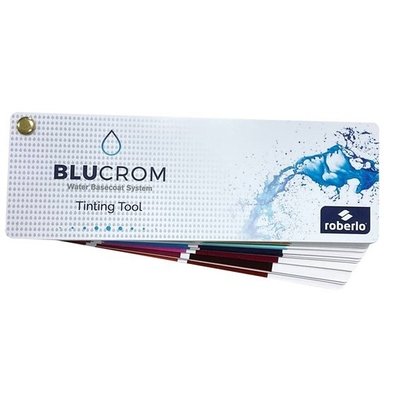
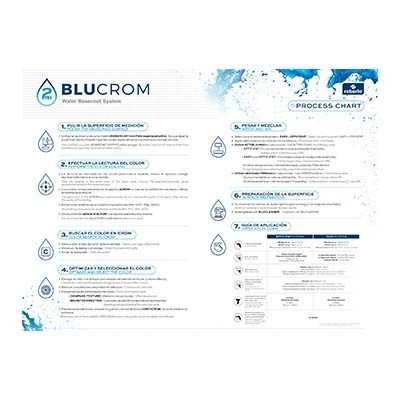
Gradient cards and posters
- They include precise information on the basic colors used in the formulation, such as their covering power, tonality or colorimetric behavior.
- They are used, mainly, in color retouching markets.
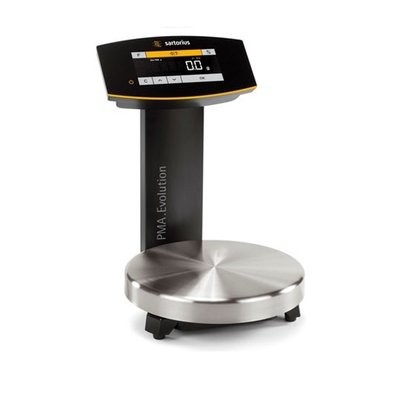
 Precision scale
- It is linked with the manufacturer’s software to carry out the precise weighing of the basic ingredients that make up a specific formulation.
- It is linked to the software so that its operation is aligned with its functionalities in terms of color and variant selected for weighing, automatic taring when reaching the amount indicated for each basic used, the need to reformulate when the operator goes over on a basic, etc
Color tools to optimize color matching
The colors currently used by vehicle manufacturers have evolved in recent decades, going from using very simple plain colors to colors with effects that are more complex to match and reproduce. For this reason, it is essential to have a series of color tools that cannot be missing in the paint bodyshop, in order to increase efficiency and precision when managing everything related to the choice of refinishing color. In this sense, the tool that offers greater versatility, productivity and efficiency is, undoubtedly, the spectrophotometer in combination with the particle selector.