Within the management of a workshop nowadays, we find the need to make the business profitable through different actions that increase the efficiency of the work processes. In this sense, one of the most interesting options is to reduce the energy consumption of the body shop, since in recent years there has been a continuous alternation in the rise in the price of fossil fuels and the price of energy that has punished the profit margins.
And although a priori we may think that the reduction of energy consumption involves turning off the lights and changing the bulbs for energy-saving ones, the reality in a body shop is much broader, since there are different actions aimed at achieving this goal, which, when applied together, can contribute to improving the profitability of the body shop.
Can you imagine what they might be? Whether you can imagine them or not, don’t worry, because, we have prepared a series of two articles in which we deal with this topic from a functional approach so that it can be useful to you.
So, let’s start with the first post of this series, in which we will analyze the three-star tips that can quickly help reduce energy consumption in the body shop. Here we go!
3 particularly useful tips for reducing energy consumption in the body shop
The reduction of energy consumption responds to two fundamental objectives within the company. On the one hand, the aforementioned one related to the need to contribute to improving the profitability of the body shop, and on the other, to participate in the fight against climate change, which, in turn, offers a corporate image committed to the environment in the eyes of public administrations and customers.
Thus, the tips for reducing energy consumption in the body shop that contribute to achieving both objectives are as follows:
Tip Nº 1. Study and control of the energy consumption of the body shop
Before initiating any action related to the reduction of energy consumption in the body shop, it is necessary to know the energy situation of the body shop in terms of the energy supplies normally used, which are generally electricity, gas and diesel, to determine the volume of consumption and how they affect the balance of annual expenses. After this analysis, almost certainly, the conclusion will be that the greatest energy expenditure is produced through electricity, since it is the energy on which the lighting and a large part of the machinery and equipment used depend.
Once we have the summary of all of them, we proceed to the review of gas and electricity supply contracts, since they are those likely to significantly reduce energy consumption. Within these contracts, the term that can offer the greatest savings is the energy term, so this will be the main aspect to consider when looking for options and comparing the deregulated market with the regulated one. However, power terms, hourly discrimination and reactive supplements also provide savings on the bill.
The extent of potential savings is calculated, for reference, using the previous year’s annual data, which will be multiplied by the new tariffs.
Similarly, it is also important to evaluate diesel consumption to improve the purchase price with options such as purchasing larger quantities or looking for distributors with lower prices.
To conclude this advice, it is no less important to establish continuous monitoring and control of the energy consumption of the body shop, sectoring the consumption to establish the appropriate strategies to detect anomalous consumption, as well as to make the necessary changes and adjustments at all times.
Tip Nº2. Use air-drying products.
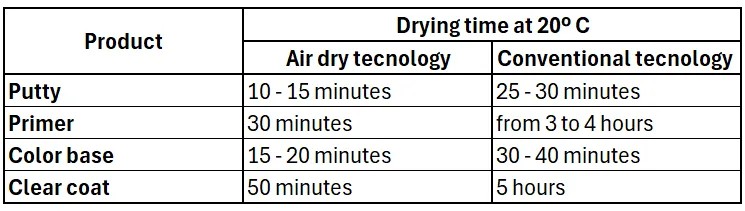
The use of air-drying paint products is possibly the fastest, most economical and easiest solution to integrate into the daily operation of the body shop to reduce the energy consumption associated with its activity. An example of this is the Airex Pocess range of products, in which air is used to reduce drying times considerably (up to 75%) without the need for any additional drying equipment or tools. This range of products includes fillers, primers, color bases and air-drying clear coats, so the whole painting process is covered. The following image shows the comparison between this technology and the conventional one:
Tip Nº3. Perform preventive maintenance
The existence of anomalies and flaws in the different installations, equipment, machinery and tools causes a loss of efficiency, so it is essential to carry out a thorough control and preventive maintenance of all of them as a way of guaranteeing a perfect constructive and functional state that results in the reduction of energy consumption in the body shop.For example, some relevant aspects from this perspective are the periodic replacement of booth filters or air maintenance units, correcting air leaks in the compressed air installation or correcting deficiencies in the pressurization of paint booths, among others.In addition, the use of air-drying products offers other very interesting advantages such as the following:
- Reduction of bottlenecks.
- Reduction of the time the vehicle spends in the body shop.
- Faster deliveries.
- Reduced workload due to accumulation of started vehicles.
Seeking to reduce energy consumption in the body shop
Improving profitability is one of the great challenges facing any manager of a body shop. The search for improved profitability must be approached from different angles within the company, one of the most interesting of which is the reduction of energy consumption. In this sense, applying the three tips that we have analyzed in today’s post can help, especially regarding the use of air products, due to the many advantages they offer.
In any case, remember that we have a second publication on this topic in which we will show you two more tips that can complement these three to reduce as much as possible the energy consumption of the body shop, so stay tuned to our next publications in SNS.