Within the configuration of a vehicle, the paint that covers the bodywork is one of the most sensitive and valued elements by the user. In addition to the continuous exposure to physical aggressions, such as the risk of being hit or scratched, the paint is threatened daily by a series of environmental factors that compromise its integrity and the value of the vehicle. You probably know some of them, but would you know how to protect your paintwork from them? Be that as it may, below we will analyze in detail 3 environmental factors that can damage the car’s paintwork, although they will not be the only ones we will see, since in another publication we will explain another 3, what will they be?
What environmental factors can damage car paintwork?
Environmental factors are understood to be the conditions and characteristics of the environment to which the bodywork coating is exposed on a regular basis. The continuous exposure to these environmental conditions chemically attack the paint film generating damages of different magnitudes. Therefore, any consequence or damage that occurs on the paint that is not caused by some type of impact or accidental spillage can be qualified as damage caused by an environmental factor.
The environmental factors harmful to the car’s paintwork can be very diverse, although if the most common and innate to the environment are taken into account, these are the most frequent:
Harmful environmental factor Nº1: Solar radiation
We are all aware of the negative effects of ultraviolet radiation emitted by the sun on our skin, but did you know that it is also harmful to the paintwork of vehicles? Yes, the continuous exposure of the paintwork to the sun’s rays causes a progressive degradation that ends up making it less attractive. When the vehicle is coated with single-coat or single-component spray paints, the degenerative process is more pronounced than when it is coated with two-coat finishes.

The tendency of single-coat finishes is to lose gloss over time until they become completely matt, while two-coat finishes suffer a less pronounced degradation that will depend largely on the quality of the clear coat used, being the most common that they yellow with the passage of time. To avoid these undesired effects, it is recommended to recoat always with two-coat finishes, where the clear coat used is of quality and UHS, for example, as well as to use additional products that offer protection, such as waxes and ceramic coatings. Within the waxes, those of synthetic nature are the ones that offer a longer protection in time (between 6 and 8 months).
Another material that is affected by the sun’s radiation is polycarbonates. These plastics, normally used in headlight bulbs or custody windows, are originally coated with a transparent coating that protects them. However, over time or after a sanding and polishing process, this coating disappears leaving the plastic completely exposed, causing the polycarbonate to yellow, lose transparency and become more brittle. For this reason, it is important to safeguard, as far as possible, the vehicle from direct sunlight and to varnish any polycarbonate that has been restored by an aggressive sanding process.
Harmful environmental factor Nº2: Humidity
Humidity is another of the great enemies of steel bodywork, since the molecules of this metal react with those of oxygen, generating a chemical compound called iron oxide that attacks the surface of the metal and gradually decomposes it.
To counteract this drawback, today’s car bodies come from the factory perfectly sealed and coated, although, as is well known, as soon as the vehicle starts to circulate it is exposed to different types of damage that damage the paintwork and open the door for moisture to reach the steel. This problem can also occur when some kind of low quality repair is carried out in which the proper work processes are not respected and the necessary protection products are not used (cavity waxes, anticorrosive primers, putties, etc.).
Therefore, the best way to protect our vehicle against the dreaded effects of humidity is to seal or repair any scratches or damage where the paintwork has suffered surface damage. It is also essential to carry out any repairs in reliable bodyshops that guarantee quality work.
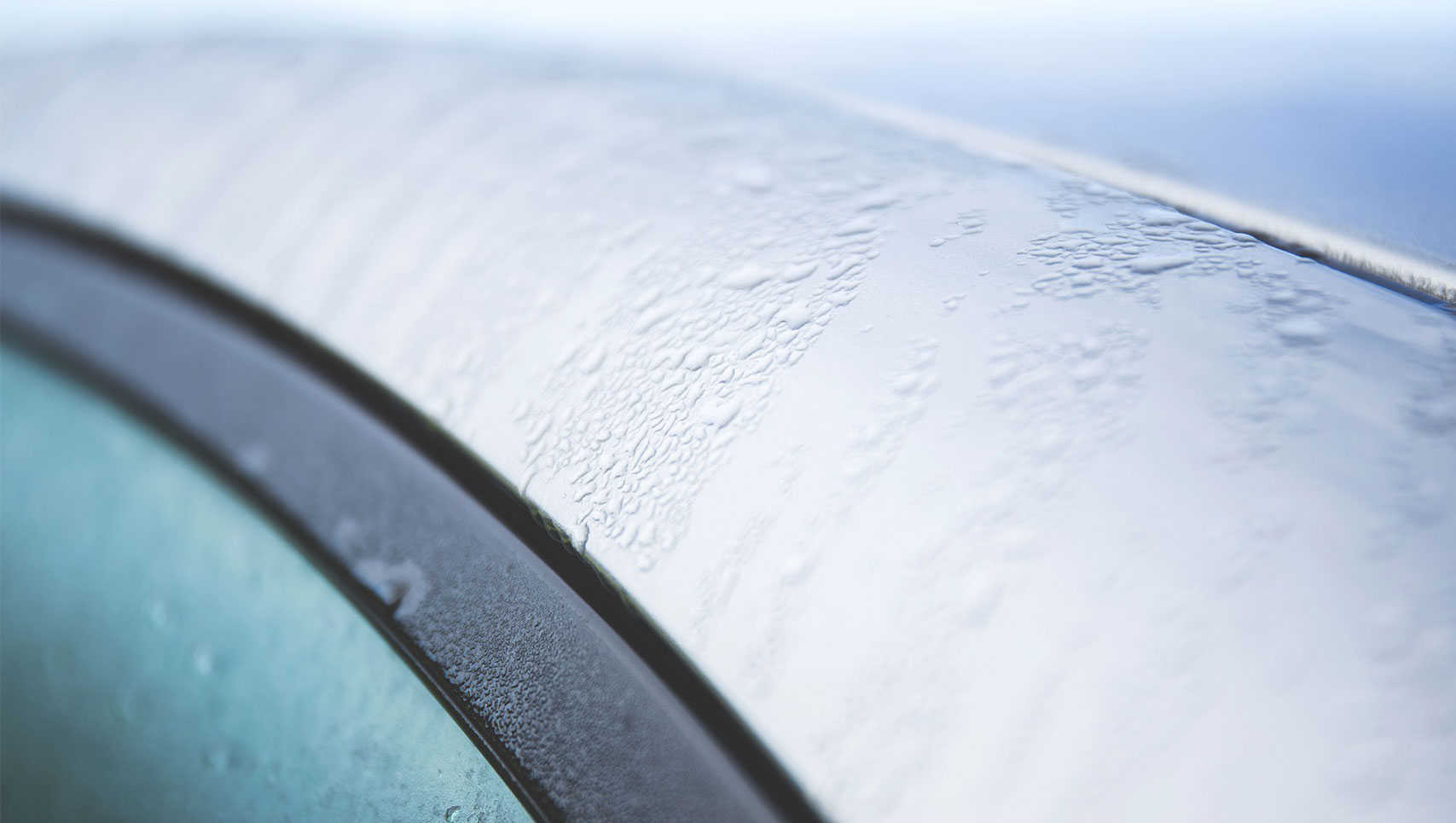
On the other hand, night dew also has a damaging effect on flat parts and high areas of vehicle parts, where it tends to overflow, or on elements made of polycarbonate. Dew is produced when, due to a sharp drop in ambient temperature, the water that is part of the air condenses. These water deposits cause more aggressive temperature changes on the surface, which in the medium and long term causes discoloration of the paint or polycarbonate.
Harmful environmental factor Nº3: Fouling of biological origin
Biological fouling is another important source of deterioration of a vehicle’s paintwork, which is sometimes not given the importance it deserves. The most common types of fouling are those generated by bird droppings, insect remains and tree resin.
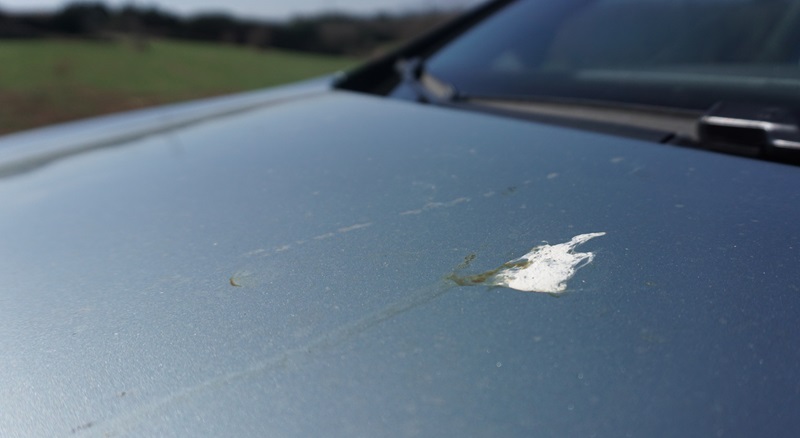
In the case of bird droppings, it is a fecal residue containing uric acid that chemically attacks the paint, causing marks on its surface that are easily visible to the eye. In addition, if the droppings are left to dry, they are more expensive to remove and there is a risk of scratching the paintwork by rubbing the area. It is therefore advisable to remove the droppings before they dry with water and pH-neutral shampoo, or with some type of wipe or specific product for this purpose. If, on the other hand, the excrement is already dry, it is advisable to moisten it until it softens before rubbing the surface.
With respect to the remains of embedded insects, two situations can occur. The first is that the insect has simply burst into contact with the bodywork, without causing any damage to the paintwork. In this case, the remains of the insect are easily removed with specific products. The second situation is that, after the impact of the insect, the paint flakes off and reveals the lower layers of paint, increasing the risk of oxidation. In this case, the most appropriate solution would be to seal or repair the area to prevent the entry of moisture.
Finally, tree resin can also be harmful to the paintwork, especially when it dries and sticks to the paintwork. Therefore, when this happens, any residue should be removed immediately. While the resin is viscous, it is easier to remove it, so it is at that time when it should be rinsed with warm water and pH neutral shampoo. If it does not disappear, the remaining option is to do it with acrylic degreasers or alcohols. During the removal process it is important not to rub the surface excessively or with force to avoid scratching.
In cases where the resin is dry, the process will inevitably be more aggressive, as the resin will need to be pulled off and scrubbed more insistently to remove any remaining residue. Because of this, it is more than likely that the area will have to be polished and buffed.
Whenever it is necessary to rub the surface, soft bristle brushes or soft textured cloths that do not scratch the paint, such as microfibers, should be used. Under no circumstances should paper or rags not indicated for vehicle cleaning be used. In addition, for those incrustations that are difficult to remove, a more aggressive cleaner of an alkaline nature with organic and inorganic matter dispersing capacity can be used.
Paint care as a way of not detracting from the value of our vehicles
The paint that covers the bodywork is one of the elements that most influences the perceived image of the vehicle. Inevitably, it is one of the main aspects that people look at, for example, when buying a vehicle. It is also a coating that protects steel against rust and corrosion. Therefore, knowing the three environmental factors that can damage the car’s paint, as well as how to prevent and correct them, is a very good option to ensure the preservation, appearance and value of the car, so if you detect any of them, do not hesitate to solve them quickly!
And remember that we will soon publish another post with 3 other environmental factors that can damage the paintwork that you should also know, so stay tuned!