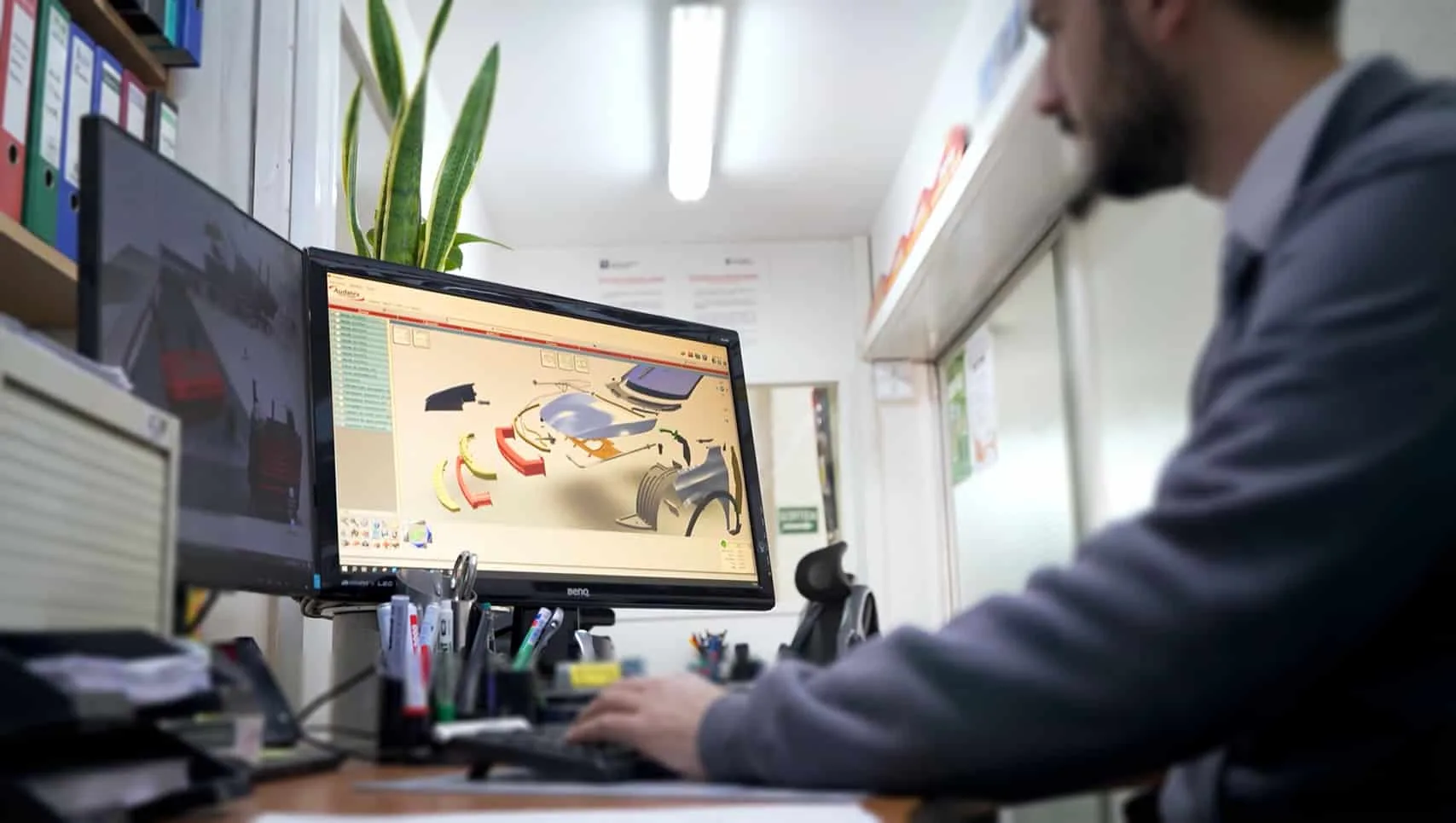
Little by little, the electric vehicle is becoming more common on our roads. This slow but steady growth means that in a few years there will be a significant number of vehicles with this technology. For this reason, the automotive sector, including paint and repair bodyshops, must get used to the idea that restructuring and adapting is going to be needed in order to work on these vehicles safely.
However, a series of issues relating to everything that affects the electric vehicle user and bodyshop have been publicized. And, as you would expect, within these issues we find myths and truths that must be carefully considered in order to keep well-informed. Do you want to learn about them?
Myths and truths about the repair of the electric car
The spread of fake news in current society is widespread, thanks to the effect of social networks. For this reason, it is increasingly important that the user seeks reliable information sources that give a true picture. Accordingly, 4 myths and 4 truths that we have compared and that most affect the paint and repair bodyshop are described below:
1. First myth and first truth of the electric car
The first myth that has spread rapidly is that the electric vehicle cannot dry in the paint booth because of the temperature reached inside it during the drying function. So, where did this myth come from? Like other fake news, one or more truths are used in order to misrepresent the subject and create a myth. In this case, the truth is found in the electric car repair manuals and it says the following:
Electric vehicles batteries do not tolerate temperatures above 60-65°C very well. Specifically, they lose effectiveness and their useful life is reduced.
Thus, making use of this fact and the high cost of the batteries (between approximately € 5,000 and € 10,000) has fed this myth. To attest to this, some of the most important institutions and companies in the sector have carried out different drying tests under normal conditions, without any damaging effect detected in the battery. What does have to be considered is that under no circumstances should 60-65°C be exceeded, and that this heat must be provided in a series of short time periods that will depend on the type of source that emits the heat.
2. Second myth and second truth of the electric car
The second myth that we are going to debunk is that to repair and paint an electrical vehicle, specific products must be used. This is completely untrue: the paint products and accessories used are exactly the same, as they do not affect the electrical system of the vehicle in any way. As with the previous myth, this affirmation is false and is based on the following technical criterion, which is true:
To repair electrical vehicles with aluminum bodywork, specific tools and equipment must be used.
This truth has spread into the paint coating market in general with the purpose of feeding the aforementioned myth. Furthermore, some brands have taken advantage of this to market their materials and paints as products that dry below the temperature referred to in the first myth, when in reality they always have done and are the same products that are used for refinishing vehicles with internal combustion engines.
Nevertheless, the use of specific tools is not exclusive to electric vehicles, as this is something that already happens with vehicles with internal combustion engines that have parts or bodywork of this material. From this, we can deduce that this requirement is not due to the type of engine that is fitted, but solely to the type of material used to manufacture the body.
Moreover, the myth may have gathered momentum by drawing on the fact that some paint manufacturers are investigating specific coatings to be used to coat the battery and its components, which carry out the following functions:
- Maintaining a battery operating temperature that is as uniform as possible.
- Offering electrical shielding to reduce or eliminate the electrical risk.
- Controlling electrical interference.
- Acting as a control and suppression element of possible fires in the battery.
- Providing anti-corrosion protection.

3. Third myth and third truth of the electric car
The third myth that has spread is that in the case of accident or while working on the vehicle, there is a high risk of fire. Again, technical issues have been brought to the land of the lie to create this false statement. In fact, the following truths have been used to feed the myth:
These vehicles operate with high-voltage electricity (up to 500 V) and with a battery that is in continuous operation and that has a tendency to overheat, which means it must have a specific and very effective cooling system.
These issues have been taken out of context to state that this is why the risk of fire is greater. After relevant tests were carried out by experts, no higher incidence was detected than a car with an internal combustion engine. Nevertheless, it is very important to be trained in this respect, to use the specific personal protective equipment, to disconnect the electrical connection before handling (this operation must be carried out by an accredited and certified technician), to delimit and indicate the work on the vehicle with signs, and to carry out preventive maintenance with the following checks:
- Verification of the safety devices and the proper connections and insulation of the electrical contacts.
- Verification that the battery cooling system is operating correctly.
4. Fourth myth and fourth truth of the electric car
The fourth myth is related to the previous one as it is supported by the truth that the electrical vehicle needs high-voltage electrical power to function. Drawing on this reality, the myth that has been spread is that there is a greater risk of electrocution, especially when the car has been in an accident, is wet or is being repaired.
Although the electrocution risk exists, as it does with any electrical apparatus for daily use (hairdryer, toaster, etc.), it is not true that there is a greater risk, as the vehicle manufacturers have been required to take measures such as the following to prevent any electrical contact:
- Shielding potentially hazardous elements.
- Incorporating devices for the disconnection of the electrical supply in case of accident.
- Marking the wiring with bright colors so that, at a glance, it makes the person who intends to handle it wary.
- Publishing a safety document that includes action protocols in different situations, among them those aimed at repairing the vehicle in the bodyshop.
At the same time, mechanical tool distributors already market specific fully isolated tools (they withstand up to 1000 V) for working on electric vehicles.
Discovering the truths of the electric vehicle
The arrival of the electric vehicle is a reality. With it, vehicle bodyshops must be prepared for this and be trained in this regard. However, a process of disinformation has been fueled from some circles, rather than training. For this reason, in this article we have debunked 4 of the most widespread myths, whilst at the same time uncovering the 4 truths that have been used inappropriately to attempt to give the falsehoods credibility.