Direct-to-metal bonding solutions, known as DTMs, offer greater efficiency than conventional products, optimizing time and material, making them highly productive solutions. However, DTM products live with some false myths that have been nurtured over the years. But over the years, DTM solutions have been evolving and improving thanks to new materials and technologies developed in the R&D departments.
What are DTMs?
DTM – Direct to Metal – products are “one step” products which, as the name suggests, can be applied directly to metal. The surface does not need a previous primer coat, as DTM solutions adhere to metallic surfaces.
What do DTMs offer?
The main benefit of these solutions is that the painting process is optimized, both in terms of time and the amount of product used. Therefore, they increase the efficiency of the process and the productivity of the professional.
With DTMs, since they can be applied directly to metal, the entire process of applying and drying the primer coat is eliminated. This saves the product that would be used as a primer and also saves time; the time used by the applicator and the time it would take for the primer to dry before the topcoat can be applied. These savings also represent significant economic savings, both in terms of product and labor.
Myth #1 – They do not provide corrosion protection for the surface
Corrosion is the great enemy of surfaces that are exposed to the open air, where humidity and salinity can deteriorate the substrate.
The ISO 12944 standard determines the degree of corrosion protection of a coating and establishes 5 corrosivity categories, depending on the exposure environment:
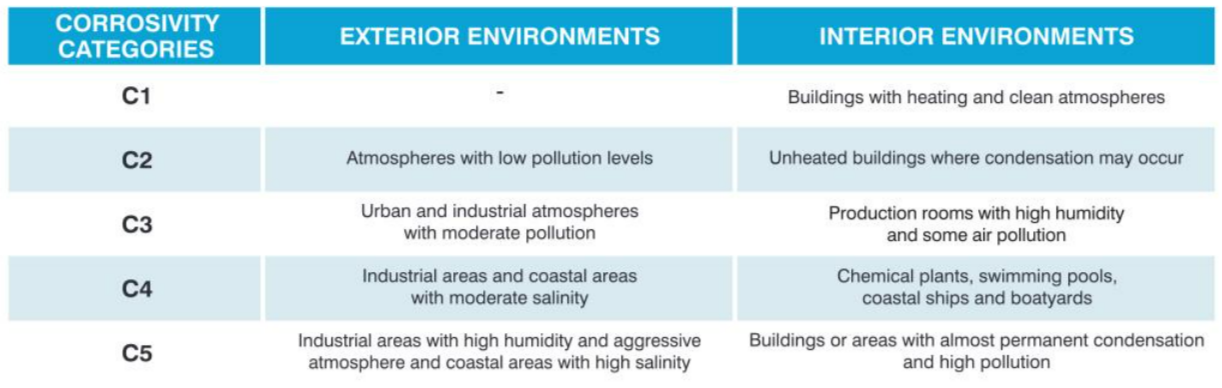
Today, thanks to technological advances developed in laboratories, there are numerous DTM solutions that also provide corrosion protection to the substrate, such as PUR 844 SMARTECH, PUR 840 or SINT 744.
Myth #2 – Lower durability than conventional processes
There is a belief that Direct To Metal coatings have lower durability than 2 step coatings. This belief is false, since there is no argument to support it. R&D teams devote much of their efforts to creating coatings with properties that extend their durability.

Myth #3 – They do not adhere to all metals
The vast majority of DTM solutions adhere to all the most commonly used metals in the industry, such as steel, galvanized, iron, aluminum, stainless steel, electro-zinc plated, cast iron, etc.
This myth originated in the early days of DTMs due to lack of user confidence. As in all areas of life, making a change involves effort; it means leaving one’s comfort zone, leaving behind habits to which one is accustomed, to explore new processes in which one has no previous experience.
Don’t believe the false myths about DTMs
As you have seen, the myths surrounding direct-to-metal (DTM) products are not well founded. Moreover, these solutions are a very good option for all those processes in which you want to optimize the refinishing process and economic costs without sacrificing a quality, reliable and durable finish.